Texas Trilogy 1: Dreidel in Texas

Texas Trilogy 1: Dreidel in Texas

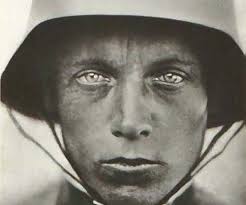
This is a slightly re-edited and expanded version of a slideshow I did about five months ago, probably the second one I compiled this year (I did two in all of last year). I originally called it “Random Memories of East Texas,” in part because I wanted a deliberately flat title to balance the rather sensational subject matter, but also beacause I realized it was an attempt–however flawed–to come to terms with living in East Texas for twenty years.  It wasn’t a very good or even very accurate title, as most of the events it focused on didn’t even take place in East Texas, but in Dallas and Austin. Also, although they were someone’s Texas memories, they weren’t really my memories, since I didn’t start living in Texas until 1991, well after the tragic events depicted in the first two movements of the slideshow.  Also, I felt that James Bryd Jr.’s killing, which I was at least in Texas for (although over fifty miles away from Jasper), really didn’t get adequate treatment, in part because the song ended too soon for my purposes. In the re-edited, expanded, and re-titled version, I have extended the audio track with some sound effects, thus allowing me to insert another six or seven slides in the final section.

I’m not sure it has a message in the conventional sense, beyond the obvious point that Texas can be a dangerous place, in part because of its culture, and in part because it’s simply so big that some more or less random bad stuff is bound to happen. I always liked Don Maclean’s song “Dreidel,” and I have a fairly clear memory of him performing it on some daytime talk show about the time this album (his third) was released. I’m fairly sure it was a song (like the “The Pride Parade”) that he wrote to explore his own mental situation in the wake of the massive success of his American Pie album that had come out the year before. Nevertheless, I think most people have a tendancy to personalize the songs they like and listen to a lot, and I’m sure I tended to think of both songs as in some sense reflections on my own feelings on entering high school in Southern California in the early seventies. I don’t think that sense of identification ever fully left me, even when I stopped listening to Don Maclean (probably a mistake on my part, and doubtless one of many).  The immediate stimulus for this slideshow was probably watching “The Tower” on Netflix, a brilliant documentary looking at the Austin clocktower murders of 1966, an incident I really don’t remember (I would have been nine), although I remember my mother talking about it. Similarly, I was even younger when President Kennedy was assasinated, and I’m fairly sure I did not see it live (it seems unlikely it was even carried live on most national television stations, although it may well have been in the Dallas area). I do remember my mother hearing about it on the radio and talking with our next door neighbor, Mrs. Leddy, over the wall separating out two backyards from one another. I think they were crying, but I may be embellishing the memory (I would have just turned six a couple weeks before).

James Bryd Jr.s death was widely reported in Smith County where I was living at the time, and I am pretty sure many local people were aware that it made the national news, which tended to make the people I knew uncomfortable.  I even remember the joke making the rounds at the time (“What red and black and two miles long”–I think you can guess the answer, even if you haven’t heard it before). Humor is of course one way human beings tend to express and deal with discomfort, although it is also a way of expressing and reinforcing power relationships, often making sure that marginal groups stay marginalized. I suspect both were at work here, although I am sure some would disagree, especially as meanings of things like jokes tend to change according to time and context, so  that one particular performance may well convey different meanings, and even different listeners may take different meanings away, some perhaps quite different than the teller consciously intended. Anyway, here is the first of three slideshows about Texas (the other two are both quite different, and were made several months after the first version of this one).
Donovan’s “Lalena”: A unofficial slideshow about prostitutes

Donovan’s “Lalena”: A unofficial slideshow about prostitutes

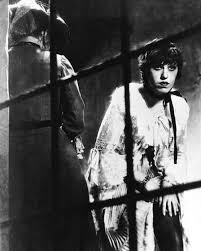
[Cross-posted on my Donovan–Slideshows by passage2trth page] Donovan’s “Lalena” was a song I always admired without ever really thinking about it very much.  Certainly, the song’s most striking feature was Donovan’s rather lovely vibrato and its melancholy mood, a mood I realize I have always found attractive.  While of course I knew that it was about a girl with an unusual name who seemed rather sad, I never really thought about the implications of the lyrics until quite recently, when I was looking for a followup to “Universal Soldier.” Once I did pause to think about who the lyrics were describing, it seemed rather obvious she was a prostitute, getting up “when the sun goes to bed,” one whose “lot in life” makes the song’s narrator sad even as he refuses to blame her for her situation, presumably because it is beyond her control. While by no means the only song ever written about what is frequently characterized as the world’s oldest profession (cf. “Love for Sale, “Sweet Georgia Brown,” “Roxanne,” among many others), it is sort of surprising that “Lalena” was an AM hit in the sixties reaching number #33 on the Hot 100 in Billboard.  Of course, so was The Animals version of “The House of the Rising Sun.” In fact, Donovan was apparently inspired to write the song by Lotte Lenya‘s character of Jenny (a streetwalker) in the 1931 film version of Berthold Brecht and Kurt Weil’s The Threepenny Opera. Donovan seems to have added an extra syllable to her surname in order to make the haunting chorus work musically, while the “lot in life” line is quite probably a gentle play the actress’s first name.

Having decided to make the slideshow into a mini-history of prostitution, and wanting to be true to the song in both being not too graphic and rather melancholy, I chose to use Final Cut Pro (only the second time I’ve done so, and I’m still learning how) to do a series of overlays, often drawn from impressionist, post-impressionist, and modernist art (with a few photographs) in order to convey the song’s–and the woman’s–sadness at her situation. It may be a bit too busy, but I think it generally works in the way it gets across a deep underlying melancholy that is central to the song’s appeal. The audio, by the way is not the single version, but a version Donovan performed for Italian public television in 1968.

Donovan’s “Universal Soldier”: An Unofficial Slideshow

Donovan’s “Universal Soldier”: An Unofficial Slideshow

Honestly, I barely remember hearing “Universal Soldier” while growing up in Bakersfield. The local AM radio station (“K-A-F-Y Bak-ers-feild”) played some of his other hits, like “Sunshine Superman” and “Jennifer Juniper,” but they probably felt this song was too controversial, or perhaps simply not pop enough.  Hearing it again “Universal Soldier” (authored by Buffy Sainte-Marie) seems more relevant than ever, although at the same time less likely than ever to effect any real change. That may be simply illusion, however, created by the nostalgia one so often feels for one’s youth. I have to admit, in creating this slideshow I wasn’t entirely sure what approach to take, especially as there are already a couple of pretty good slideshows that take their inspiration from it on YouTube.  Originally, I had thought of focusing on the victims of war, but then I got this idea which seemed more–to coin an adjective–Donovanesque.  I like to think he’d approve of it, if he ever sees it. In any event, I hope you approve, or at least listen.

The War on Drugs: a personal essay and a slideshow

The War on Drugs: a personal essay and a slideshow

To a large extent, this diary was inspired by a recent visit to the Reagan Presidential Library in Simi Valley.  I am sure most visitors are gratified at the largely positive and almost worshipful treatment of their hero, the man who proclaimed “morning in America” and “compassionate conservatism.”  I have to admit I had the opposite reaction, in that the visit forced to me to remember and confront how much I truly loathed Reagan and much of what he came to be associated with. I didn’t think much of him as an actor, disliked him as governor, and found him fundamentally dishonest and actively harmful as president.  Although technically started by Nixon, one of the many movements Ronald and Nancy Reagan are given credit for promoting is what has come to be called the war on drugs.

While no doubt the problem is with me, I have never been able to summon up the kind of virulent contempt and passionate hatred for people who use, sometimes become addicted to, and even sell drugs for a profit.  This is despite the fact that I have been repeatedly told by my parents, teachers, countless TV shows,  movies, and even some popular music (e.g. Neil Young’s “The Needle and the Damage Done“) that unperscribed drugs were BAD, the people who used them WEAK, and those who sold them downright EVIL.  Speaking as an alcoholic who has used drugs in the past, as well as known other people who used them, I suspect I have a natural sympathy for the weak, a trait I do not tend to identify with being naturally joined to being either bad or evil.  On the contrary, I tend to see them as easily victimized by ruthless, powerful, and often rich people (three traits that are more often than not held up for admiration in America).  On a more personal level, the isolation, anxiety, shame, and pain of living in the modern world seemed to practically cry out in anguish for some sort of chemical response, although suicide was always a possible (and not wholly unattractive) option.  For me it was mostly alcohol (which I would still call my drug of choice, although I am currently not drinking one day at a time), but I certainly experimented with others, mostly depressants.

There has always been a fundamental hypocrisy in the approach to drugs in the United States.  As has been extensively documented, marijuana was largely criminalized as a way of keeping “those people”–mostly darker skinned–controlled and in line. If you were rich, doctors would gladly perscribe you whatever you wanted, and if you were white and had the proper (that is, conservative) outlook, you could happily abuse while heaping another sort of abuse on those who lacked your “connections.”  If caught, you rarely lost much by it and tended to be quickly forgiven (celebrity also plays a role here) as, for example, Rush Limbaugh was.  If it ended badly (e.g. Elvis), you became an object for sympathy and prayer, emotions and actions rarely extended towards those not in the proper sociocultural group.

Drugs profits were also easily justified by “higher” causes, such as fighting communisim (e.g. those tens of thousands of people murdered in central America) or radical Islam (e.g. once the Taliban were defeated and the Americans came in, opium production skyrocketed–somebody is getting rich–and I suspect it isn’t just people with Middle Eastern complexions).  The cocaine sold to finance the contras, for example, certainly ended up in the hands of inner city youth who–if they didn’t kill each other fighting over market share–could conveniently be used to supply the burgeoning prison industry, with the added “benefit” (in many states) of permenantly losing their “right” to vote.  It seems no accident that our current leader, both expands private for-profit prisons and cracks (note the pun) down on pot on the same day.

This slideshow is very much in line with some of my others on serious subjects, such as Slave to the (Algo)Rhythm, They Moved the Moon, and Guilt, but it reverses the pattern of some of my other extended audio-visual meditations on topics in that–unlike, say “Bitter Salt“–it goes from the geneneral and historical to the private and more personal. The first two songs–virtually unheard in the US (I think you can figure out why)–more or less embrace the idea of taking drugs. Spacemen 3‘s “Come Down Easy” (from their classic album Taking Drugs to Make Music to Take Drugs To–surely one of the greatest album titles ever) is set against America’s dirty war in Central America and the generally unpunished or pardoned perpetrators, which in and of itself–if one truly tried to discover what was going on (almost no one did, and those few were either silenced or hounded to their graves).   This followed by Black Grape‘s hilarious parody of the Reagan’s drug war from their Stupid, Stupid Stupid album, “Get Higher.” Generally, the laughter keeps the tears at bay. Finally, Barenaked Ladies‘ “The War on Drugs” from their Everything to Everyone album explores the reasons why and the costs of taking drugs, both on the individual and those around them in a way that is both emotionally moving and–especially in the sudden, anticlimactic end–quietly devastating, musically replicating how society treats such “disposable” people.

I hope you find it worth your while.

A Slideshow about Guilt: Personal, Collective, and a River in Egypt

A Slideshow about Guilt: Personal, Collective, and a River in Egypt

Also posted yesterday at The Daily Kos. I had a rather disturbing conversation the other day with someone I very much respect, someone—in fact—who has probably done more to improve my outlook on myself and even the world than anyone I have met in a long time. I had just shown him two slideshows, They Moved the Moon (about the California genocide of American Indians), and The Freshmen, a slideshow that started out as an attempt to find a foundation for dialogue in the pain that every individual inevitably experiences, but ended up being more like a prophecy of mutual doom amounting to a kind of self-genocide that would hardly be acknowledged (if ever) until it was far too late. He seemed to be saying that the problem was not with the world, but with me; and if I could just figure out the roots of my attraction to subjects like injustice, inequality, unmerited suffering, and genocide then everything would be—if not exactly all right—at least I wouldn’t be very concerned and therefore a happier, better adjusted human being.

I recognize that there is a good deal of truth in his point of view, I probably would be a happier, more well-adjusted human being, although probably never “normal,” at least in the normal sense of the word. This slideshow is to some extent a product of that conversation a few days ago, and I realize that I, with characteristic perversity, have responded to his call for more tightly focused self-exploration of my anxieties and fears with the goal of eventually forging a more optimistic perspective on life by doing exactly the opposite. While I wouldn’t have really thought it was possible for me to go darker after The Freshmen (which at least started out as an attempt to empathize with people I didn’t like very much at all), I think I may have managed it, in part by Guilt’s wider focus, and in part by its direct attempt to address subjects which are usually either suppressed, denied, or belittled in America: the toxic effect of social expectations and stereotypes, the use of a religion as a justification for exploiting and destroying the marginal and powerless, the silencing and even murder of those who dare to tell us truths we don’t want to hear, and the deliberate suppression of many of the more unpleasant parts of our own history that do not conform to our self-flattering image of ourselves, to our incessantly repeated mantra that “America is the greatest country in world” (I suppose it may be true, depending on what you think “greatest” means).

All of these slideshows essentially grow out of a subject (here, guilt) and a song (here, three songs). Perhaps not surprisingly I chose Marianne Faithfull’s song “Guilt,” originally released on her brilliant Broken English album, although this version is from a live performance on a late-eighties television show. I chose it largely because I thought the drums, and the propulsive drive of the song, were a bit sharper and crisper than on the original. This section largely deals with private and personal feelings of guilt, but also introduces some larger issues explored in the second section. For this next section, I chose a version of Iggy & the Stooges “Dirt,” originally released on the 1970 Funhouse album, although this one is from a 2011 live performance in Detroit, which I chose largely because of the late Ron Asheton’s stunning atonal guitar work. Here I really move into questions of collective responsibility for the way the world is and don’t really come to any cheery conclusions. The final section, to a large extent inspired by Arctic Monkeys “This House is a Circus” from their Favorite Worst Nightmare album (2007). The “house” in question is, of course, The White House, with Hair Furor being the embodiment and inevitable conclusion of the escalating fear, hatred, selfishness, and victimization that are undoubtedly hard-wired into human nature, merely waiting for the proper circumstances (unfortunately now) to bring them to full, poisonous fruition.

I would certainly understand if you decided not to watch something that I freely admit is pretty depressing (in fact, kudos to you for having read this far).  I should warn you that there are a couple of curse words (it is Iggy, after all), and one of them is even written out, a young woman flips off the camera, and a few of the images are disturbing, although probably not as bad as something you could see any day on cable TV. Personally, I’d rate it a PG. I hope you do watch it, in part because I think it works as an aesthetic object, in part because I think it is emotionally powerful and moving, and finally because they are pretty terrific versions of some pretty terrific songs.

The Freshmen: A Slideshow about Pain, Triumph, Loss, and Lots of Suffering, Awful People

The Freshmen: A Slideshow about Pain, Triumph, Loss, and Lots of Suffering, Awful People

Previously posted on The Daily Kos. I really had not intended for this slideshow to be quite so bleak. Once I came up with the idea of using The Verve’s Pipe’s “The Freshmen,” a powerfully moving song apparently written about the suicide of lead singer Brian Vander Ark’s girlfriend, as a way of addressing the political and emotional fallout from the election, it to some degree took on a life of its own, almost in spite of my conscious intentions. Frankly, it’s probably the bleakest thing I’ve done since “UKnowYourReichs,” a slideshow about Holocaust denial set to Kurt Cobain’s last song, a song which (to me anyway) seemed to look forward fairly obviously to his own suicide about a month after Nirvana recorded it. That slideshow was in part inspired by Night Will Fall, Andre Singer’s 2014 documentary about the liberation of the Concentration Camps at the end of WWII. Although I was by no means completely unfamiliar with the material, the film made a deep impression on me when I first saw it about three months ago, so deep that the documentary seemed more like a prophecy of things to come than a a record of events safely compartmentalized in the past.

Like Bitter Salt, this slideshow began as an attempt to find common ground in the shared experience of pain, with idea of moving beyond it to mutual cooperation if not necessarily shared understanding.  Tea partiers and progressives may listen to different media outlets, have different circles of friends, have completely different concepts of the historical and  philosophical bases for American society, and radically opposed concepts for what goals we hope America might become; nevertheless, as human beings we all suffer, and all those other diametrically divergent attitudes are—at least in part—our attempts to deal with our individual experience of pain, trauma, and isolation. Even our “fearless leader” (apologies to fans of Rocky and Bullwinkle, but I just can’t bring myself to say Hair Furor’s actual title), strikes me as a deeply damaged human being, a damage at least in part the product of his family life, education, experiences, as well as of his own bad choices and their often destructive consequences.

Certainly one of the ideas behind The Verve Pipe song is that we make bad choices, often self-destructive or destructive of those around us,  because we don’t necessarily have the wisdom or the life experience to make good choices. To make explicit an implicit conceit of the song, at some point we are all “freshmen,” doing ignorant and even stupid things in stupid ways because we don’t know any better, and because we are too wrapped up in our own pain to acknowledge that of others, at least until it is too late. The repeated and increasingly unconvincing refrain, “I can’t be held responsible,” paradoxically communicates the deep and overwhelming sense of responsibility the singer feels, as well as his understandable and all-too-common desire to blame the other party (after all, like an abused spouse, she’s responsible too because “She fell in love in the first place”).

I am certain that in compiling this slideshow I was playing with the not wholly accurate media portrayal of the Tea Party movement and the “average” Trump voter as—to some extent—political neophytes easily manipulated by a corporate media and political demagogues who cynically exploited these people’s pain for their own ends, ends that were often destructive of the very people that they purported to represent and to help, as well as targeting a host of relatively powerless “others” who could be identified by their darker skin, problematic citizenship, differing sexual orientation, or divergent religious and philosophical beliefs, all of whom merited by their very existence at the very least exclusion and—if Tea Partiers were truly being honest about it—their systematic destruction.

Certainly one thing that struck me in gathering the photos for this slideshow is how fervent the devotion of many Trump supporters were to their leader. While it is difficult if not impossible to truly divine what people are thinking from their facial expressions and body language, with a remarkable number, it looks an awful (and I do mean awful) lot like love, which itself raises questions about how such a beneficent emotion could have such toxic results? I suspect, as the opening  slides try to suggest, such tensions are deeply embedded in our human nature, and are certainly evident in the dark (and largely officially suppressed) side of American history. Similarly, I chose the last verse and chorus of the Ben Folds Five “Brick” (a song about the songwriter’s trip to an abortion clinic with his high school girlfriend over Christmas break), because it is one of the saddest songs I think I have ever heard, perfectly expressing the isolation, grief, and overwhelming pain caused by the experience which (to tie it back to The Verve Pipe song) the couple in question were simply not emotionally ready for, being “freshmen” in their own way. Although it isn’t directly stated in the song, it is hard to escape the conclusion that the relationship didn’t survive the trauma of that fateful day over the Christmas holidays.

The two brief film clips—only the second time I’ve tried to include them in a slide show (the first was (“UKnowYourReichs”)—also seem even more significant than they did when I first thought to include them. The first portrays the suicide of a gay German Jew, Albrecht Stein, the lover of the tortured hero of Before the Fall, while the second—from the 2008 horror movie Quarantine—shows the professional woman lead character Angela (a TV reporter) being dragged off into the terrifying darkness by rabid, zombie-like people who really don’t seem much like people at all anymore. The images of the two falling or being pulled into nothingness are both similar, horrifying, and haunting. The point about the dangers of being in a marginal group are almost too obvious to belabor, although one has the sense that being part of the powerful “in” group—whether being a Nazi or an uninfected male—offers no more than a brief reprieve in our collective, ever-accelerating plunge into the abyss.

It seems silly to say I hope you like slideshow, which takes two songs about deeply individual feelings of guilt and transform them into a means of exploring our collective guilt (at least I’ve given you fair warning about what’s coming), but I hope you are moved by it, and that some of that emotional rearrangement might result in positive action.

They Moved the Moon: The California Genocide; a slideshow set to two Warren Zevon Songs

They Moved the Moon: The California Genocide; a slideshow set to two Warren Zevon Songs

Also posted, in slightly different form, about four days ago on The Daily Kos. This diary and the slideshow which accompanies it, were inspired by Meteor Blades’ diary of June 25th, “On the 141st Anniversary of Custer’s Well-Remembered Last Stand, why is California’s Genocide Forgotten?” As a native Californian, albeit of European ancestry, I was wondering how I could have missed this, although I was certainly aware of the controversy surrounding Father Junipero Serra’s sanctification, as well as more vaguely aware of the lynchings, riots, and institutional racism occasionally (as I then thought) practiced against Native Americans, Mexican Americans, Chinese-Americans, Japanese Americans, and African-Americans. I was not aware of how systematic, murderously successful, and popularly and legally prevalent it was. When Meteor Blades’ title asks how people could have forgotten it, I found myself asking how I could have forgotten it? The answer is, as I am sure is true for most white Californians, is that we never learned about it in the first place, and what scraps we did know were largely the product of a highly selective and—let’s face it—whitewashed popular culture (as I remember, there were a couple of episodes of Bonanza—and I think one of Gunsmoke—that dealt with racism against Chinese immigrants, and every two or three seasons one of the longer running westerns would have an episode that would at least obliquely address unfair treatment of Native Americans).

Not to rehearse Meteor Blades well-researched and far superior diary, he recounts the steady, popularly-supported decimation of California’s indigenous population:

There was one massacre after another after another after another, in each of which more California Indians were killed than were soldiers of Custer’s regiment in Montana. White Californians, the vast majority of them newcomers, had reduced the California Indian population to about 30,000 by 1873.

Even more appalling (although not so surprising, given that I had been living in East Texas for twenty years by this time, so I was perfectly aware not only that such things had happened in the past, but that they were still going on), were the ways in which the legal, judicial, electoral, and economic systems were manipulated so that Native Americans could be rendered powerless, exploited, stolen from, and murdered with impunity, with the public support of both politicians and many local newspapers. According to Benjamin Madley in the Los Angeles Times (quoted at greater and even more horrifying length in Meteor Blades’ diary),

California’s Legislature first convened in 1850, and one of its initial orders of business was banning all Indians from voting, barring those with “one-half of Indian blood” or more from giving evidence for or against whites in criminal cases, and denying Indians the right to serve as jurors. California legislators later banned Indians from serving as attorneys. In combination, these laws largely shut Indians out of participation in and protection by the state legal system. This amounted to a virtual grant of impunity to those who attacked them.

Institutionalized racism and oppression thus go back to the very roots of California statehood, by no means limited to Orange County or South Central, as sometimes seems to be case in media portrayals. Of course, racism, brutality, and forced conversions dated back to the very founding of the Spanish Mission system, but there were qualitative and quantitive differences once the Gold Rush started and California joined the United States as it hurtled towards civil war. As Iberian points out in his comment on Meteor Blades’ diary:

The Spanish system and missions where oppressive, abusive and murderous but they were not genocidal. There wasn’t any intent of eliminating the native population. After the gold rush and statehood the native populations were intentionally exterminated, and the mixed and Spanish/Mexican populations prosecuted, assaulted and dispossessed in many cases, other Hispanics that came also for the gold rush also assaulted and the anti-Chinese hysteria raging in pogroms. All of it not only sanctioned by local and state officials but at the request of the local government and even California Senators in DC. Ethnic cleansing in California has a horrible history the worse for the native populations, but extending to many other ethnic groups.

As I remember, when I studied the local Native American tribes of Kern County back in grammar school, they were presented quite sympathetically: I still remember watching short films showing how the local natives ground acorns and made meal, while men hunted deer and participated in fascinating sweat lodge ceremonies. I realize now, of course, how dangerously easy it is to romanticize a people who essentially no longer exist. Such appropriated but conveniently invisible peoples provide one’s existence with history, continuity, and a kind of Edenic past; while by their absence they make no claims upon you in the present. With this in mind, here is a slideshow set to Warren Zevon’s “They Moved the Moon” and “Join Me in L.A.” I had considered using his brilliant “Carmelita” in the second half, but I must admit I kind of like it this way. Although probably not as well known, “Join Me” has a kind of snarky energy, and permits an ending of hopeful defiance—if not of optimism—about the future (I also learned a bit about the Tongva and other tribes that inhabited the Los Angeles basin, so the song allowed me to focus the slideshow even more locally in its second half). I had already done a slideshow on Holocaust denial, and another on the persecution of marginal groups from the Middle Ages to the present, but I felt maybe it was time to explore something more uncomfortably close to home. Anyway, here it is—while the slideshow doesn’t begin to do justice to the magnitude of the event, it does do something. What that is, remains for you to decide:

“The Scorpion Departs but Never Returns”: An Elegiac-Patriotic Slideshow inspired by Phil Ochs

“The Scorpion Departs but Never Returns”: An Elegiac-Patriotic Slideshow inspired by Phil Ochs

This is a slideshow I originally posted on the “50 Phil Ochs Fans Can’t Be Wrong”  group on Facebook, then on The Daily Kos, but it has garnered so much positive response (for me, anyway, so the bar is pretty low), that I thought I would post it here. It is sort of appropriate for the upcoming July 4th holiday, although it is more marked by a tone of elegiac doom than celebratory patriotism (Memorial Day would have been more appropriate, but I just finished it yesterday morning). I have found out some interesting stuff from the numerous responses I have gotten. As one of my Facebook respondents pointed out, Phil had an earlier song on another submarine disaster (the USS Thresher) that appears on his “All the News thats Fit to Sing” album. Also, according to one of my Daily Kos respondents, it was written in the key of D minor, and I must say the effect is still incredibly haunting, and I’m sure I’ve listened to it more than a hundred times.

This slideshow inspired by one of Phil’s most evocative and moving songs, “The Scorpion Departs but Never Returns” (from his “Rehearsals for Retirement” album. Actually, it wasn’t until fairly recently that I learned it was based on an actual event, the disappearance of the nuclear submarine the U.S.S. Scorpion (SSN-589) on May 22, 1968, about three months before Phil went to Chicago. I was nine years old at the time, but passionately interested in news and politics, although I have to admit I have no memory of hearing about submarine’s disappearance at the time (1968 was a very busy and rather horrific year). Although there have been lots of theories, many designed to stoke cold war hysteria and increase public support for the ever-expanding military industrial complex, apparently the sub imploded because it went too deep. As the Scorpion’s nickname among some of her crew members was “scrapiron,”and she apparently had not been fully serviced, I suspect structural deficiencies had something to do with it. The audio at the end of the video, after Phil’s song concludes, is the audio record of the implosion (the first boom is the actual implosion, followed by a series of diminishing echoes). If I am reading the recording correctly (posted above), everybody on board basically died within two seconds, probably crushed by the implosion rather than drowning (of course, this was not public knowledge when Phil wrote the song).

I have tried to do justice to the pathos of the terrible loss of life of the tragedy, and the suffering of the sailor’s surviving friends and relations, while also trying to illustrate how Phil was using his poetic imagination to transform the incident into a means to explore his own growing depression, before being pretty much tipped into the abyss by the tear gas and riot sticks of August. Hope you like it.


Build a Rocket Boys: An Optimistic Slideshow inspired by Elbow’s “Lippy Kids”

I’m pretty sure that my earliest career aspiration was to be an aeronautical engineer. In part, I knew that such a path–combining as it did mathematical skill, engineering, and practical application–would please my Dad, who I desperately wanted to please. It was pretty much a given that I would go to Caltech, as he had done to get his geology degree, and I have fond memories of attending parent/child days at the college, whose obvious intention was to get the sons (and, to a lesser degree, daughters) of alumni to come to the venerable Pasadena institution as what would now be called “legacy” students. I was actually quite attracted to the idea of going. One of my few books growing up that I actually owned was a History of Flight, and I was fascinated by stories of the Montgofliers, Otto Lilienthal, Edmund Langley, the Wright Brothers, Glenn Curtis, Eddie Rickenbacker, and Charles Lindbergh.  This was the sixties, and the romance of flight (e.g. “Catch Me if You Can”) and space travel were perhaps at their height. Unfortunately, I wasn’t a particularly skilled mathematician, my intuitive sense of space and ability to manipulate it were probably below average, and anything that required neatness, precision, a steady hand, and a keen eye (e.g. almost all scientific experiments) were pretty much beyond my sloppy, imprecise, clumsy, and near-sighted capabilities.

While I did eventually go to UCLA–a highly respected school on the west coast–there was little question that (in my father’s eyes at least) I was “settling” and taking the easy way out. Real scientists, those who did real work in the real world, whose work had fairly obvious real world consequences, went to Caltech; posers and liberal arts students went to UCLA.  In some sense that I still can’t quite explain, disappointing my father was worse than incurring his wrath, and it isn’t as if he would go on and on about what a failure I was. A look, a casual remark, or an occasional offhand gesture would be enough to convey the scope and magnitude of my inadequacy.

Nevertheless, I always kept my early interest in, even love of, flight and space travel. It was probably one of sources of my almost immediate attraction to the Elbow song, “Lippy Kids,” a song which seems to be about the intense friendships, almost arbitrary social rituals, and seemingly unlimited potential we still tend to identify with youth. To be honest, I don’t think the song is about building rockets in any literal way, but rather striving for and sometimes even achieving distant and lofty goals in whatever field of endeavor one might be drawn to. I had been kind of wanting to do a slideshow about this song (I love Elbow, by the way, and am really looking forward to seeing them again at The Wiltern this November), and two events last Tuesday sort of stimulated me to create this. The first was my psychologist suggesting that I might try making a slideshow that was wholly upbeat and optimistic as opposed to one that progressed from a bleak view of the world to a more positive one (e.g. “Bitter Salt,” and “Siren’s Song”). While this isn’t wholly optimistic, it comes close. Tuesday afternoon, I visited JPL on a tour, bringing my camera, and took lots of photos. This is actually the first slideshow I’ve done where some of the photography is actually my own, and I hope to develop that more in the future. The tour also brought back my early passions for flight and space travel, as well as the self-fulfillment (self-actualization?) that comes from doing something you love.  In that sense, it’s a kind of audio visual love letter to precocious, lippy kids everywhere. Hope you like it.

I am aware (as I hope is apparent in the slideshow) that it wasn’t just boys building rockets and studying science. With that in mind, this one is for Pam.

Season of the Witch: Revisited

Season of the Witch: Revisited

“Season of the Witch” was so unlike Donovan’s generally optimistic, New Age-anticipating, romantic catalog that I always sort of assumed it was a cover (and I actually had a copy of his Greatest Hits growing up that plainly lists him as the writer).  The song’s sense of dislocation and paranoia, of things falling apart, seemed a world away from “Mellow Yellow,” “Wear Your Love Like Heaven,” or “Sunshine Superman,” even if you were never totally sure what the latter song was about.  Nevertheless, I loved his version of “Season,” and I still consider it about the best out there.

The slideshow was an interesting one to make, in that I started seeing connections between things, such as witch hunts and anit-semitisim, eugenics and white power, Hair Furor and King Leopold, that I had never really thought of as having much relation before. I also had no idea James Garfield had such a way with words, at least until he was assassinated. I originally planned it as examination of anti-Semitism, but it ended up becoming much broader than that, for better or worse, which is really for you to decide.

I was interested in the topic of Anti-Semitism, in part because–although I was raised as a Catholic and have no Jewish relations as far as I know–it seemed as if at least once a year a complete stranger would stop me on the street and ask me if I was Jewish. Sometimes they accepted my slightly apologetic denials without further questioning, although occasionally they could be quite persistent, seemingly absolutely certain about their identification. I, after all, had only my memories, as well as my personal and familial experience, to go on; they had . . . what, exactly?  Whatever it was, at least some of them seemed to have absolute faith in their ability to “divine” a Jew. I have to admit, it happened with enough regularity up until middle age, that I found myself wondering about what it was  that they were reacting to? My hair (dark, but not stereotypically curly), my nose (big but not hooked), my glasses (I never had the impression that bad eyesight was an ethnic or religious signifier)?  Could they be privy to some information about myself that had been kept hidden from me? Perhaps they wanted to invite me to some ultra-cool, ultra-exclusive party? Maybe they just wanted to put my name on a list for some mysterious future purpose, not necessarily a malevolent one, although I couldn’t help wondering a little.

I never really felt threatened, partly because these encounters usually took place on relatively populous, public streets, usually in the afternoon, and the tone of the questions usually came across as interested rather than hostile. Certainly, many people take pride in their ability to identify and “size up” other people, although I couldn’t escape drawing the conclusion that many such people aren’t nearly as expert at it as they seemed to think. I have no doubt they were right some of the time, but that isn’t really a very impressive trick of discernment. In any event, at about the time I turned forty, this annual ritual of mis-recognition evolved into a more benign form. Instead of being asked if I was Jewish, I started to be asked (again, by complete strangers) if I were Steven Spielberg? I quickly developed what seemed to be a convincing comeback for this: “No; he’s thinner, richer, and more talented than I am.” Rather to my disappointment, no one ever continued to insist that I was Spielberg in spite of my denials; my contention that I was overweight, not terribly rich, and not terribly talented was just so obviously, so empirically, so intuitively true, that they usually laughed, nodded, and walked away. No one, of course, ever asked who I was, but I have a feeling that this is not a question that gets asked much in modern American society, which may itself be symptomaic of the problems addressed in this slideshow:

Despite its rather bleak perspective on human beings, I hope somebody can take something positive out of it.