This slideshow i s actually set to two very different songs that both have Texas settings. The first, by Denton band Deep Blue Something (best known for their 1995 hit “Breakfast at Tiffanys”), is a deeply affectionate portrait of Denton and East Texas generally. If anything, the slideshow is even more expressive of this sense of place than the song is, although I also personalize it by including photos of several people I actually do miss from Texas (I have gotten their permission to use their photos). The second song, by Warren Zevon, is from his penulitimate album, My Ride’s Here. Although he spent much of his adult life in California, he places this song in a rather surreal East Texas. This seems fitting, because (at least to me) Texas could be a rather surreal place. As it is also a song about death (Warren died of cancer a little more than a year after the album was released), it seems an appropriate place to end this trilogy of slideshows.
The Butthole Surfer’s “Pepper” was a song I liked virtually from the first time I heard it, although it always had a distinctly personal feel, naming people and places that the band was presumably directly acquainted with. The chorus always seemed to have statewide and perhaps even universal application in the way it called into question all of our flattering self-conceptions, because–as the song says–“you never know just how you’ll look through other people’s eyes.” Last month I realized that you could take the song’s verses and appy them to more statewide problems, from health, to deregulation and public safety, to gun deaths, to the environment, to oil, and to the Texas Railroad Commission (which “regulates” the oil industry with considerable help from heavily [in]vested interests). l’m not sure anyone who hasn’t lived in Texas for several years will really “get” this slideshow, and even among those who have I have a feeling many will be offended by it, not because anything in the slideshow is false, but because one doesn’t talk about such things in Texas, at least not in public. If I was a “true” Texan I’m sure I would know this and act appropriately, but I’m not anymore and probably never was, at least not really. So consider it a highly idiosyncratic take on the state from a highly eccentric Californian (and therefore to be dismissed). I don’t really expect to get a large number of views, but you never know and–after all–everything’s bigger in Texas.
This is a slightly re-edited and expanded version of a slideshow I did about five months ago, probably the second one I compiled this year (I did two in all of last year). I originally called it “Random Memories of East Texas,” in part because I wanted a deliberately flat title to balance the rather sensational subject matter, but also beacause I realized it was an attempt–however flawed–to come to terms with living in East Texas for twenty years. It wasn’t a very good or even very accurate title, as most of the events it focused on didn’t even take place in East Texas, but in Dallas and Austin. Also, although they were someone’s Texas memories, they weren’t really my memories, since I didn’t start living in Texas until 1991, well after the tragic events depicted in the first two movements of the slideshow. Also, I felt that James Bryd Jr.’s killing, which I was at least in Texas for (although over fifty miles away from Jasper), really didn’t get adequate treatment, in part because the song ended too soon for my purposes. In the re-edited, expanded, and re-titled version, I have extended the audio track with some sound effects, thus allowing me to insert another six or seven slides in the final section.
I’m not sure it has a message in the conventional sense, beyond the obvious point that Texas can be a dangerous place, in part because of its culture, and in part because it’s simply so big that some more or less random bad stuff is bound to happen. I always liked Don Maclean’s song “Dreidel,” and I have a fairly clear memory of him performing it on some daytime talk show about the time this album (his third) was released. I’m fairly sure it was a song (like the “The Pride Parade”) that he wrote to explore his own mental situation in the wake of the massive success of his American Pie album that had come out the year before. Nevertheless, I think most people have a tendancy to personalize the songs they like and listen to a lot, and I’m sure I tended to think of both songs as in some sense reflections on my own feelings on entering high school in Southern California in the early seventies. I don’t think that sense of identification ever fully left me, even when I stopped listening to Don Maclean (probably a mistake on my part, and doubtless one of many). The immediate stimulus for this slideshow was probably watching “The Tower” on Netflix, a brilliant documentary looking at the Austin clocktower murders of 1966, an incident I really don’t remember (I would have been nine), although I remember my mother talking about it. Similarly, I was even younger when President Kennedy was assasinated, and I’m fairly sure I did not see it live (it seems unlikely it was even carried live on most national television stations, although it may well have been in the Dallas area). I do remember my mother hearing about it on the radio and talking with our next door neighbor, Mrs. Leddy, over the wall separating out two backyards from one another. I think they were crying, but I may be embellishing the memory (I would have just turned six a couple weeks before).
James Bryd Jr.s death was widely reported in Smith County where I was living at the time, and I am pretty sure many local people were aware that it made the national news, which tended to make the people I knew uncomfortable. I even remember the joke making the rounds at the time (“What red and black and two miles long”–I think you can guess the answer, even if you haven’t heard it before). Humor is of course one way human beings tend to express and deal with discomfort, although it is also a way of expressing and reinforcing power relationships, often making sure that marginal groups stay marginalized. I suspect both were at work here, although I am sure some would disagree, especially as meanings of things like jokes tend to change according to time and context, so that one particular performance may well convey different meanings, and even different listeners may take different meanings away, some perhaps quite different than the teller consciously intended. Anyway, here is the first of three slideshows about Texas (the other two are both quite different, and were made several months after the first version of this one).
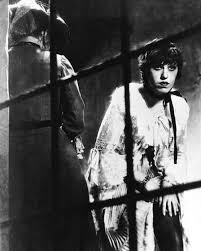
[Cross-posted on my Donovan–Slideshows by passage2trth page] Donovan’s “Lalena” was a song I always admired without ever really thinking about it very much. Certainly, the song’s most striking feature was Donovan’s rather lovely vibrato and its melancholy mood, a mood I realize I have always found attractive. While of course I knew that it was about a girl with an unusual name who seemed rather sad, I never really thought about the implications of the lyrics until quite recently, when I was looking for a followup to “Universal Soldier.” Once I did pause to think about who the lyrics were describing, it seemed rather obvious she was a prostitute, getting up “when the sun goes to bed,” one whose “lot in life” makes the song’s narrator sad even as he refuses to blame her for her situation, presumably because it is beyond her control. While by no means the only song ever written about what is frequently characterized as the world’s oldest profession (cf. “Love for Sale, “Sweet Georgia Brown,” “Roxanne,” among many others), it is sort of surprising that “Lalena” was an AM hit in the sixties reaching number #33 on the Hot 100 in Billboard. Of course, so was The Animals version of “The House of the Rising Sun.” In fact, Donovan was apparently inspired to write the song by Lotte Lenya‘s character of Jenny (a streetwalker) in the 1931 film version of Berthold Brecht and Kurt Weil’s The Threepenny Opera. Donovan seems to have added an extra syllable to her surname in order to make the haunting chorus work musically, while the “lot in life” line is quite probably a gentle play the actress’s first name.
Having decided to make the slideshow into a mini-history of prostitution, and wanting to be true to the song in both being not too graphic and rather melancholy, I chose to use Final Cut Pro (only the second time I’ve done so, and I’m still learning how) to do a series of overlays, often drawn from impressionist, post-impressionist, and modernist art (with a few photographs) in order to convey the song’s–and the woman’s–sadness at her situation. It may be a bit too busy, but I think it generally works in the way it gets across a deep underlying melancholy that is central to the song’s appeal. The audio, by the way is not the single version, but a version Donovan performed for Italian public television in 1968.
Honestly, I barely remember hearing “Universal Soldier” while growing up in Bakersfield. The local AM radio station (“K-A-F-Y Bak-ers-feild”) played some of his other hits, like “Sunshine Superman” and “Jennifer Juniper,” but they probably felt this song was too controversial, or perhaps simply not pop enough. Hearing it again “Universal Soldier” (authored by Buffy Sainte-Marie) seems more relevant than ever, although at the same time less likely than ever to effect any real change. That may be simply illusion, however, created by the nostalgia one so often feels for one’s youth. I have to admit, in creating this slideshow I wasn’t entirely sure what approach to take, especially as there are already a couple of pretty good slideshows that take their inspiration from it on YouTube. Originally, I had thought of focusing on the victims of war, but then I got this idea which seemed more–to coin an adjective–Donovanesque. I like to think he’d approve of it, if he ever sees it. In any event, I hope you approve, or at least listen.
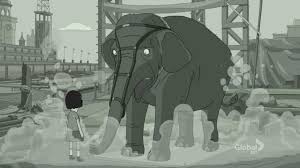
This is going to be something of a change of pace, partly because I’m not really sure what to do with it (this is probably the only slideshow I’ll make devoted to Bob’s Burgers). It is my favorite episode, and I have to admit I made it mostly because I love the song “Electric Love,” but also because it is both funny and powerfully affecting. It certainly touches on themes I seem to repeatedly return to (the suffering of the innocent (while calling into question that innocence), the way in which history gets falsified in order to promote the interests of the rich and powerful, and–of course–flatulence. It is basically built around a clip of the central scene of Tina (acting the part of Topsy the elephant) who is seemingly executed with the help of Teddy the local handyman and burger afficianado at the hands of her sister Louise. What I tried to do is place the execution of the elephant in the context of the so-called “war of the currents” between alternating current and direct current, especially as personifed in Tesla (AC) and Edison (DC). It was of course, a war that Edison won (at least in America), and in some sense his very public demonstration of the dangers of alternating current was a major victory in that propaganda war (thus causing Edison’s stock price to go up so that he died a very rich man, while his competitor died penniless). It is an American success story, while at the same time being the American failure story, one the dream, the other the nightmare that Topsy (who wasn’t exactly the innocent pachyderm that Louise makes her out to be) experienced long before Tesla did. Hope you enjoy it. Bob’s Burgers, by the way, is a show I only gradually learned to love, but I do love it now. I include the original credits, so everyone gets full credit for the stuff I didn’t do (and you get to the hear the chorus a few more times, which is probably the real reason I decided to include it).
There’s something strongly aesthetic in Rufus Wainwright’s appeal, one that goes beyond physical beauty. It’s there in his voice, his melodies, his considerable artistic ambitions and range of endeavor, even in his occasionally playful sense of fashion. I think that is one of the reasons why I chose this is as followup to the Bluebirds Fly and Hallelujan slideshows. Certainly and underlying theme of that was the potential transcendance of art and even the artist in that he or she can continue creating minor (or even major) epiphanies in people’s lives long after they are gone. This one, sticking fairly closely to the song’s narrative, looks more at art’s role in our more personal, private lives, even in those parts of ourselves that we never reveal to anyone. The main liberty it takes is the way it plays with subject and object, so that Rufus is sometimes the desiring subject (the young girl who narrates the song in memory), and at other times the desired object: The Art Teacher. Hope you like it (the audio is Rufus’ performance on Tiny Desk Concert).
I was somewhat taken aback when my when–after watching the slideshow–my psychologist suggested that it felt so personal because it was, and that the woman narrator’s memory of the art teacher paralleled my own with an important person in my life. After a moment’s reflection, I realized he was right, so this one’s for Gordon, and Rufus, of course.
To some extent, this video/slideshow is a product on my anticipating getting to see Rufus (and possibly even meet him) at the Northern Stars event at the Ford Theatre in Los Angeles this Sunday. I actually had another slideshow ready to go, which I quite like, on “The Art Teacher,” but it is more or less set in New York. In other words, it was not Canadian enough. Bluebirds Fly, my last slideshow has gotten a good deal of positive response, and I suspect one of the keys to its success was its sense of place in that it is very much set in Montreal.
Certainly Rufus’ interpretation of Leonard Cohen’s “Hallelujah” is one of his most successful and famous covers, but I wasn’t sure how to approach it until I ran into Choir! Choir Choir!’s version on YouTube (a highly successful video on just about every level, by the way). This 2016 performance was part of the Illuminato festival in Toronto, a festival which has been going on since 2007, and that Rufus has been involved in at least 3 or 4 times, according to the Luminato Wikipedia page. I have been to Toronto three or four times, but never for this festival, which I now would really like to attend, possibly in 2018. I quickly found some terrific images from the festival, and I had the idea of interweaving slideshows with the video (not exactly a mashup, but certainly a heavily edited version of the original). Thus the verses are mostly slideshows portraying details described in the song, often illustrated with evocative images from the festival, and sometimes with pictures of Rufus (who I sort of re-conceptualize as David), while the choruses are mostly from the original video (the most difficult part was getting the audio to synch properly). Almost half of this passage2truth edit is simply the Choir! Choir! Choir! performance with Rufus (which is pretty terrific), I keep the original end credits, and try to make clear that I am only responsible for the inserted slideshows and the edits (in other words, where film clips begin and end). I think it may have even more impact than the original, but I am probably too close to it to judge. In any event, I hope you like it or–if nothing else–it will inspire you to go see the original uncut (or at least not by me) video on YouTube (it’s got almost six million views). In a way I can’t quite explain (other than it being the Toronto-centric counterpart to the Montreal-centered slideshow from last week), it does seem like a natural extension of the feelings first explored in Bluebirds Fly.
This is kind of an extended sequel to my “Epistle to Dippy” diary and slideshow, and you’ll notice a few of the same photos (most obviously those of the Maharishi, Donovan, and The Beatles, but also of Donovan and Hendrix). My original thought was to make a slideshow that at least aspired to be a kind of pure aesthetic experience, a series of beautiful images set to Donovan’s incredibly catchy chorus and Hendrix’s brilliant guitar riffs, all framed by a rather vague Atlantis narrative (which I have never the taken that seriously, except as a kind of fable in Plato’s Timaeus). I think it ended up being rather more than that–almost the audio-visual equivalent of a metaphysical poem, although there are some fairly clear themes (the trascendence of art, the desire for escape from the horrors of the world, and of course transformation) running through it. The very conscious way it interweaves what we might call the oceanic and the cosmic is my attempt (I hope partly successful) to bring some very disparate things in relation to one another and at least point towards (although not really explain) some kind of ultimate meaning (I’m sort of playing with Boethian and neoPlatonic ideas, but not in any kind of rigorous way). However, if you just want to appreciate it as a kind of trippy music video, that’s okay too, and that really was pretty close to my original intention anyway.
The Donovan audio track is from what must be the introduction to The Smothers Brothers Comedy Hour. The track cuts out rather abruptly because a voice over comes in telling you who is going to be on the show that night (if you listen carefully, you can just hear the announcer say the beginning of Mort Sahl’s name, who obviously got top billing that night). Frankly, I like this version better than the original single, which I always thought was a bit overproduced. I find the simplicity and clarity of this version remarkably moving. I’m not sure if I have a good reason for using The Allman Brothers version of “1983,” other than that I really liked it (what it lacks in smoothness, it makes up for with a kind of crunchy power), and that I was a little leery of getting involved in the kind of copyright problems that have long plagued the legally entangled Hendrix estate (they may have been resolved now, I didn’t really continue pursuing it after stumbling upon The Allman’s version). A few people (not that I expect that many to see it), will notice I’m trying some new things here: Formal titles at the beginning and end, with introductory and concluding sound effects, and even scrolling credits, as well as two video excerpts, one oceanic and one cosmic (the first from an Oceanic Preservation Society video, the second from Yavar Abbas’s Journey to the Edge of the Universe [2007]).
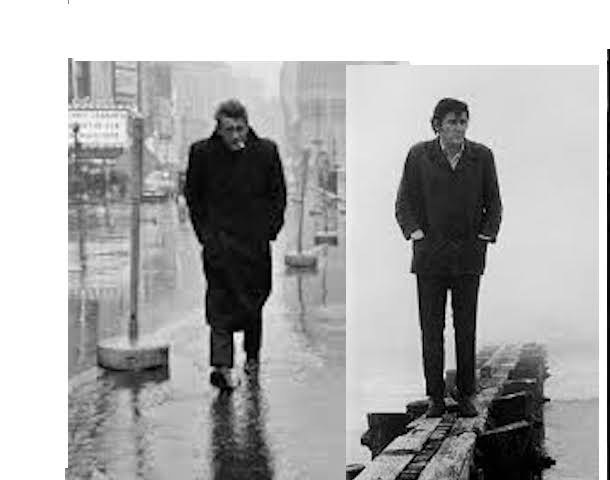
“Jim Dean of Indiana” is not one of Phil Ochs’ better known songs, certainly not up there with “I Ain’t Marchin Anymore,” “Small Circle of Friends,” or even “When I’m Gone.” It is from his last album, the ironically titled Phil Ochs Greatest Hits, was never released as a single, and recieved little to no airplay. I have to admit when I first heard the album back in the seventies, “Jim Dean” didn’t impress me nearly as much as Phil’s baroque mini-masterpieces, “No More Songs” and “Bach, Beethover, Mozart, & Me,” his country semi-parody, “Gas Station Women” (which I now see more as a homage to Faron Young), or the occasionally covered straightforward rock song, “My Kingdom for a Car.” Nevertheless, the song had deep meaning for Phil, for whom Dean had near mythical significance since first encountering him in late adolescence, seeing him in pictures like East of Eden, Rebel Without a Cause, and Giant as a larger-than-life figure at the local movie theater. As he was coming to the end of a brief but incredibly productive recording career, Phil seems to have consciously returned to his roots for inspiration, writing about the time he was “A Boy in Ohio,” and the homage to Faron Young I refer to above. Phil seems to have become increasingly drawn to his own homage to the Hollywood rebel-icon, apparently obssessively playing it on the piano at his sister’s house in Far Rockaway, New York in the last months before his suicide in April 1976.
Coming back to the song after not listening to it for a long time, I find the song has a delicacy and simplicity that is quite moving. It certainly isn’t the type of song Phil was best known for–protest songs like “Another Age“–being instead a kind of understated excercise in empathy, and perhaps a plea for compassion for the lost and the lonely, a state that Phil was coming increasingly to identify with as he started a long slide into deep depression. The song is not strictly accurate as an account of Dean’s life: he wasn’t physically abused by a farm hand, but more likely sexually abused by a local minister, and the song entirely ignores the many years Dean spent in Southern California before his mother’s death from uterine cancer in 1940 (it was at this time he joined his aunt Ortense and her husband Marcus Wilson in Indiana. Phil, in fact, was in a position to know some intimate details of Dean’s life, in that he often talked with Troubadour owner Doug Weston about the actor while living in Los Angeles. In fact, Weston had at least occasionally talked to Dean while working as a bartender in early 1950s Greenwich Village (Eliot, Death of a Rebel 156-57), although how intimate their conversations were, and how much of them Weston conveyed to to a fascinated Phil I don’t know. Nevertheless, it is a very interesting song, very briefly mentioning Dean’s movie career, largely because the song is less anchored to the actor’s person than the place he lived in from pre-adolescence until his mid-teens: the Wilson farm in Indiana. Thus we remain achored in Dean’s conscousness until he moves away, but then he is a figure mostly seen from the perspecitive of Marcus and Ortense Wilson and–to a much lesser degree–the surrounding townspeople. The physical presence of the living Dean only enters the song once away from the farm, and that is when Marcus and Ortense drive to Los Angeles to “speak with him for half an hour,” before leaving for his rendevous with mortality. The song is not strictly chronological, and the slideshow is even more unstuck in time (Giant only came out after Dean died, but I believe the marquee photo is of the local cinema in Fairmount, Indiana), but I think it works. I hope you do too.
This is sort of the conclusion of what I am coming to think of an elegiac trilogy of slideshows, the first on Emmylou Harris and Gram Parsons, the second on Rufus Wainwright and Kate McGarrigle, and this one on Jim and Phil, who never met but who were both ‘boys in Midwest,’ to slightly paraphrase Phil’s song. This one’s for Shannon. And for James and Phil, of course.







 passage2truth