I was just rewatching the Sunshine Superman DVD about Donvan’s life last weekend, and found it fascinating–among the many things I had forgotten about him was all the time he spent with the Beatles in India, becoming part of the group that surrounded Maharishi Mahesh Yogi. I had been wanting to make a slideshow about “Epistle to Dippy,” a song I really liked when I was about ten (I may not have been too sure what an epistle was, but I knew I liked the song), but couldn’t quite decide what approach to take to this rather oblique song. Suddenly the young monk meditating amid misty mountains made perfect sense, and I basically treated the “you” the song addresses as in fact Donovan himself as he is introduced to these new, “all kinds of windows,” perspectives on life. I have read, by the way, that the song was actually written to a friend who had joined the military. That may well be true (although its certainly isn’t obvious), the interpretation I offer here (which is really is intended to be evocative rather than prescriptive), I don’t pretend to any genuine knowledge of what Donovan really “meant” by the song. It’s still a great song, whatever you think of therse video, although of course I hope you enjoy both.
Quick note: this is actually an alternative take I found on YouTube rather than the single version. Although done in a much more baroque style than the hit single, it has a wonderful swirling energy that I like as much as the more popular version.
This was an attempt to do a fairly straightforward fan video. While the expectation for a “hurdy gurdy man” to resolve the “crying of humanity” is probably naieve, it certainly is attractive. I also loved all the antique photos of street musicians I ran across, as well as some nice ones of Donovan. Hope you enjoy it.
This is actually a slideshow I made in response to a comment I got on my “Unofficial:Loudon Wainwright III” Facebook page. John Burns mentioned that he had just been talking about “Dead Skunk” a couple of days before. I responded that people really seemed to like the slideshows I’ve done that feature animals prominently (“Me and My Friend the Cat” has gotten almost twice as many views as my second most popular slideshow), and that I thought he had just given me an idea for my next one. This is the result. It features lots of animals–mostly dead ones (it’s basically a funny, peppy song about roadkill). The audio by the way, is from a YouTube video of Loudon performing on Rockpalast, a German TV show (I think this is from 1984). This is why the end is so abrupt (the clip just ends there), and I tried to fill it out a bit with a couple of appropriate sound effects from iMovie. I also included some of Loudon’s introduction, partly for historical interest, and partly because it allowed me to insert a little bit of political satire. I apologize if you are offended by it, although I suspect that there is not all that much overlap between passionate Loudon Wainwright III fans and passionate fans of the current administration, so I don’t expect it to be a huge problem.
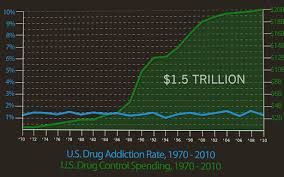
To a large extent, this diary was inspired by a recent visit to the Reagan Presidential Library in Simi Valley. I am sure most visitors are gratified at the largely positive and almost worshipful treatment of their hero, the man who proclaimed “morning in America” and “compassionate conservatism.” I have to admit I had the opposite reaction, in that the visit forced to me to remember and confront how much I truly loathed Reagan and much of what he came to be associated with. I didn’t think much of him as an actor, disliked him as governor, and found him fundamentally dishonest and actively harmful as president. Although technically started by Nixon, one of the many movements Ronald and Nancy Reagan are given credit for promoting is what has come to be called the war on drugs.
While no doubt the problem is with me, I have never been able to summon up the kind of virulent contempt and passionate hatred for people who use, sometimes become addicted to, and even sell drugs for a profit. This is despite the fact that I have been repeatedly told by my parents, teachers, countless TV shows, movies, and even some popular music (e.g. Neil Young’s “The Needle and the Damage Done“) that unperscribed drugs were BAD, the people who used them WEAK, and those who sold them downright EVIL. Speaking as an alcoholic who has used drugs in the past, as well as known other people who used them, I suspect I have a natural sympathy for the weak, a trait I do not tend to identify with being naturally joined to being either bad or evil. On the contrary, I tend to see them as easily victimized by ruthless, powerful, and often rich people (three traits that are more often than not held up for admiration in America). On a more personal level, the isolation, anxiety, shame, and pain of living in the modern world seemed to practically cry out in anguish for some sort of chemical response, although suicide was always a possible (and not wholly unattractive) option. For me it was mostly alcohol (which I would still call my drug of choice, although I am currently not drinking one day at a time), but I certainly experimented with others, mostly depressants.
There has always been a fundamental hypocrisy in the approach to drugs in the United States. As has been extensively documented, marijuana was largely criminalized as a way of keeping “those people”–mostly darker skinned–controlled and in line. If you were rich, doctors would gladly perscribe you whatever you wanted, and if you were white and had the proper (that is, conservative) outlook, you could happily abuse while heaping another sort of abuse on those who lacked your “connections.” If caught, you rarely lost much by it and tended to be quickly forgiven (celebrity also plays a role here) as, for example, Rush Limbaugh was. If it ended badly (e.g. Elvis), you became an object for sympathy and prayer, emotions and actions rarely extended towards those not in the proper sociocultural group.
Drugs profits were also easily justified by “higher” causes, such as fighting communisim (e.g. those tens of thousands of people murdered in central America) or radical Islam (e.g. once the Taliban were defeated and the Americans came in, opium production skyrocketed–somebody is getting rich–and I suspect it isn’t just people with Middle Eastern complexions). The cocaine sold to finance the contras, for example, certainly ended up in the hands of inner city youth who–if they didn’t kill each other fighting over market share–could conveniently be used to supply the burgeoning prison industry, with the added “benefit” (in many states) of permenantly losing their “right” to vote. It seems no accident that our current leader, both expands private for-profit prisons and cracks (note the pun) down on pot on the same day.
This slideshow is very much in line with some of my others on serious subjects, such as Slave to the (Algo)Rhythm, They Moved the Moon, and Guilt, but it reverses the pattern of some of my other extended audio-visual meditations on topics in that–unlike, say “Bitter Salt“–it goes from the geneneral and historical to the private and more personal. The first two songs–virtually unheard in the US (I think you can figure out why)–more or less embrace the idea of taking drugs. Spacemen 3‘s “Come Down Easy” (from their classic album Taking Drugs to Make Music to Take Drugs To–surely one of the greatest album titles ever) is set against America’s dirty war in Central America and the generally unpunished or pardoned perpetrators, which in and of itself–if one truly tried to discover what was going on (almost no one did, and those few were either silenced or hounded to their graves). This followed by Black Grape‘s hilarious parody of the Reagan’s drug war from their Stupid, Stupid Stupid album, “Get Higher.” Generally, the laughter keeps the tears at bay. Finally, Barenaked Ladies‘ “The War on Drugs” from their Everything to Everyone album explores the reasons why and the costs of taking drugs, both on the individual and those around them in a way that is both emotionally moving and–especially in the sudden, anticlimactic end–quietly devastating, musically replicating how society treats such “disposable” people.
I got so much positive response, to my “Pancho and Lefty” slideshow that I though I would put up this one, which I finished last week. This is another sequence of images inspired and accompanied by a Townes Van Zandt song, “Tecumseh Valley,” which–by the way–is a real place in Oklahoma (as is Spencer, also mentioned in the song). It’s kind of an alt-country narrative ballad, a little ragged around the edges, and I think I chose this live version of the song because of that very raggedness. I was immediately drawn to it when I first heard the studio version on Townes’ Drama Falls Like Teardrops compilation. There is a beautiful music that Townes’ finds in the name (“Te-cum-seh”), and the simple poetry of the seasons, the dignity of labor, and in human passion that just sort of stunned me (a fairly normal reaction for me listening to his songs). It seems to mean even more to me now than when I first heard it, in that I realize that it is a song about someone we would essentially look at as a “disposable” person (and we’d call her much worse than that), beneath our notice except as someone to use and discard like a crumpled paper cup. The song (also recorded by Nanci Griffith and Steve Earle, among others) gives expression, dignity, and beauty to her hopes, harsh circumstances, struggles, and desires in a way that that I feel is too rarely seen, although doubtless some people will disagree. I hope you like the song at least, whatever you think of the slideshow I compiled (I basically set it in the depression and the dust bowl, although some of the photos are much more modern).
Cross-posted at The Daily Kos. I just did this Wednesday night. Emmylou Harris’s version of “Pancho and Lefty” was probably the first Townes’ song I ever heard, so I include it here, although I use a live version from the Old Grey Whistle Test rather than than the one on her Luxury Liner album. I guess the song’s narrative is very vaguely inspired by the story of Pancho Villa (according to Townes, anyway, apparently Pancho did have a companion whose name meant “lefty” in Spanish, although he only found that out after he wrote the song). Still, if you are looking for a historically accurate account of the Mexican bandit-revolutionary, you’re looking for the wrong thing in the wrong place; instead, the song is just a brilliant mediation on loyalty and loss, the choices we make and their consequences. I would argue it is Protest Music, although of an amazingly subtle kind; in any event it is still an terrific song, and I love Emmylou’s interpretation.
For no especially good reason, here is a lovely version of Emmylou Harris singing one of her own songs, “A River for Him,” from her Bluebird album. As with so many of her self-penned turns, some of it feels autobiographical, while some the some of the other lines (“I’m a stranger to the strange land I’m in / Where all is forgotten / But nothing’s forgiven”) are written at such a high level that they basically seem timeless. This not my slideshow, by the way, but was created by catman916, whose YouTube channel this is from:
After having done three rather dark slideshows inspired by Loudon Wainwright III songs, “Dead Man,” “Men,” and “Unhappy Anniversary,” this celebration of human-feline relationships is a nice change of pace. The song, “Me and My Friend the Cat,” is from “Album II,” when Loudon was recording for Atlantic Records. I am not going for any deep meanings or political points, beyond the obvious “be nice to cats and they’ll be nice to you, and “don’t I have pretty cats?” (the blue Persian is my beloved Mitzy; the tabby with the striking green eyes is Melissa, and the one that looks like a Russian Blue is Moakey) While one could extend this message to human relationships to other species (or even other humans), the slideshow really makes no attempt to do so and I’d be surprised if anybody drew such a message from it. Anyway, I hope you like it, and find it fun.
After working on “Slave to the (Algo)Rhythm” and “They Moved the Moon,” and purchasing a copy of Bob Drury’s and Tom Clavin’s The Heart of Everything That Is: The Untold Story of Red Cloud, An American Legend, I thought I needed a change of pace, which is to say, something to work on that was a bit more optimistic. I haven’t even started the book yet, but it looks fascinating, enlightening, horrifying and–I have a feeling–probably profoundly depressing. Being in a bit of a melancholy mood (not at all the same thing as depression) and thoroughly sick of the hot weather, I found myself drawn back to two Aztec Camera songs from probably my favorite album of theirs, Frestonia. I had not realized until making this slideshow that the name comes from a street in Kensington (in London). As I remember, they were Elvis Costello’s favorite band for a while back in the eighties, although they never really broke through here in the states (I believe their biggest hit in the U.S. was a cover of Van Halen’s “Jump”). These two songs, “Rainy Season” and “Imperfectly” are both to some degree about the weather, but of course that is really just a metaphor for expressing songwriter and singer Roddy Frame’s emotional and philosophical insights. The point is, at least in part, that all of these things inevitably change and evolve, and that even deep sadness allows for the possibility of being transformed into something better. I managed to find a huge number of gorgeous images of the natural world, none of which I took, and a couple of which I had to pay for the rights to use them on the web.
I hope you enjoy them, if only from an aesthetic perspective, and they are lovely songs that I think have hardly been heard on this side of the Atlantic (or “the pond,” as my dissertation director used to say) and–if you listen to the lyrics, I think you’ll find that they have rather lovely lyrics to complement their lovely melodies.
Previously published (in slightly different form) on The Daily Kos. I had the rather unpleasant experience of being in prison lately. It wasn’t a surprise, in that it was a result of an arrest back in January that itself was the result of my own stupidity and despair. In essence, I turned myself into the court (as required) on Thursday morning at the end of June, went on the bus down to the County Jail around Thursday noon, and was in fact released by about one o’clock Friday afternoon. As the Torah I had brought to read was confiscated (I had been incorrectly told that you could bring a religious book—in fact you can’t bring anything from the outside at all without having it taken away at some point). Also taken (as I expected) were my self-phone, medication, a small amount of cash, and shoe laces, all of which were taken away at the local court where I was first processed, and then the rest of my clothes were exchanged for not totally unattractive prison blues and slippers when I arrived at County. I never actually got assigned a bed, but—having identified myself as a member of a “special” population—was kept in a holding cell all night with other members of my “group.” Some seemed like nice people, some not so nice, and some simply disturbed; but the same could be said about the guards, deputies, and prison staff in more or less equal proportions.
Physically, the most unpleasant part was how cold it got, especially towards the end of the night, as it was impossible to get blankets or sheets, I suppose on the rationale that a prisoner’s death from hypothermia or exposure was easier to explain than suicide by bedsheet or blanket (although—if you were really determined to kill yourself and didn’t mind your corpse being partially unclothed—I’m pretty sure your prison-issued trousers would work just as well). Psychologically, the worst part was the sense that you didn’t exist, as it quickly became apparent how practiced prison employees were at ignoring the inmates in this holding cell. You could actually see them turn to avert their eyes as they approached the long glass window that faced the prison corridor which basically everyone had to walk down in order to complete their processing and get assigned a bed and—I imagine—privileges like being able to get a book from the prison library. When they reached the end of the long glass window, their heads would snap back, so they could see us (at most) out of the corner of their eye. Although decals on the windows told us in emphatic terms to contact the guards if someone tried to commit suicide, there seemed to be no way to do this, even if they were only a few feet away on the other side of the glass. Presumably, if you splashed enough blood on the windows, one of the more compassionate and observant guards would eventually notice. Please go below the fold for more, and a cool video I made.
My attorney had e-mailed me that I would be reporting for my 96 hour sentence with two days credit for time served. So I was surprised to discover on Thursday morning that the court had no record of my two days credit (my lawyer was not present) A number of people told me I might be released early, but it was unclear was who made the decision about early release, as it didn’t seem to be the bailiff or the judge I appeared before (it wasn’t really a hearing or a trial, just an appearance). One of the sheriffs at the local jail explained that it was all based on how crowded the jail was and what category of prisoner you were. That’s when I understood: the decision would be made not be any human being, but by a computer that had been programed by human beings based on algorithms that they had designed at the behest of their employers. While I was certainly aware of algorithms, especially in terms of how they are used in Search Engines, the experience really brought home how much they have come to dominate virtually every aspect of modern life: not only search engines but the legal system, the financial sector, advertising, and even–increasingly—the arts.
As with firearms, there is nothing inherently bad about algorithms, but they can easily used for biased, unethical, or just plain evil purposes by human beings. As the old saying goes, numbers don’t lie, but people lie with numbers. They inevitably reflect the biases and petty concerns of the people who design them and—too a much greater degree—the people who hire those programmers to design them. Anyway, I came up with the idea for this slideshow last Friday night around midnight, after I had gotten tired of playing find the shape in the stain (oh look, this one resembles a dinosaur; here’s one that looks like a turd, oh no, wait—I think it is . . . I think I’ll move further away). I actually had a copy of the eponymous Grace Jones album that “Slave to the Rhythm” was released on back in the eighties (a slightly different mix than the one I use for the slideshow), although I haven’t seen or listened to it in years. By the way, I am not saying we should get rid of all algorithms, which is probably impossible as they are essentially hard wired into us, but merely that we should stop and think about what we are doing so that the algorithms we make will actually promote equity, fairness, and even connection to our fellow, suffering human brothers and sisters. It almost comes across as a joke when you state it like that, which is itself kind of sad. Anyway, here is the slideshow:
I basically made this in response to a challenge from my psychologist to try to make a wholly optimistic, even happy slideshow. If you look at the ones I’ve posted so far, although they may evolve from hurting to healing, none of them are exactly odes to joy. Frankly, I haven’t posted the really dark ones, although you can see most of them on my YouTube channel. This one, for example, looks at the Holocaust and Holocaust denial, while this one looks at notable killings in Texas. None of them offers much in the way of consolation or hope, but they both came out of a very dark place and time in my life, which was actually only several months ago. I still wonder if they aren’t more accurate evaluations of the human condition that this one, which was inspired partly by my boyhood love of Donovan, and in part by my psychologist’s challenge. While there is a lot I like about it, at times it does seem a little false and phony to me (kind of like what is called a “Hollywood” ending, which is so popular precisely because it does not reflect what people too often experience in their actual, empirical and subjective experience). Personally, I’ve always been tempermentally inclined to agree with Dorothy Parker:
Oh, life is a glorious cycle of song,
A medley of extemporanea;
And love is a thing that can never go wrong;
And I am Marie of Romania.
Actually, I thought that the “To Build a Rocket Boys” slideshow did a better job of getting across the emotional complexity of experience while at the same time maintaining a generally optimistic thrust.
Certainly, I do not deny the possibility of happiness, even with other people, despite Sartre’s famous saying about them. It certainly exists, and some people are better at it than others, porbably mostly because of their natural predisposition, but also because external circumstances–often beyond their control–inevitably impact them. Anyway, I hope you like it, and that it makes you feel good about yourself, other people, or both; if nothing else, perhaps it will hold out the possibility that things might get better.








 passage2truth